
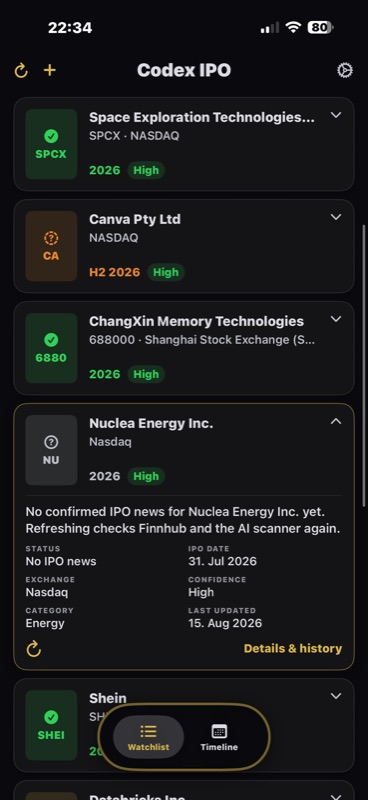
The watchlist
Every company you follow sits in one of five clear states: no news, rumoured, filed, date confirmed, now trading. A glance at the list says where each one stands — as rows, as tiles, or grouped by state when the list grows.
The watchlist stays on your device. There is no account to create and no server of ours in between; the app talks straight to the data sources with your own keys.
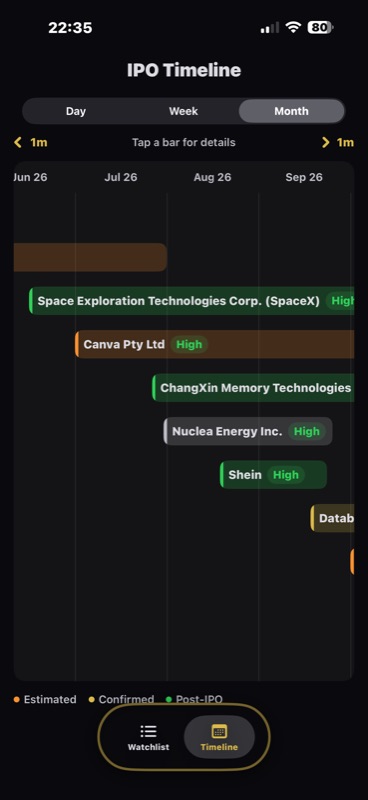
Counted down
Confirmed dates, expected windows, price per share and exchange appear as soon as each is published, laid out as a timeline of what lists next.
When a date approaches, a daily reminder counts it down — starting up to 30 days ahead, at the hour you choose, scheduled locally on the device.
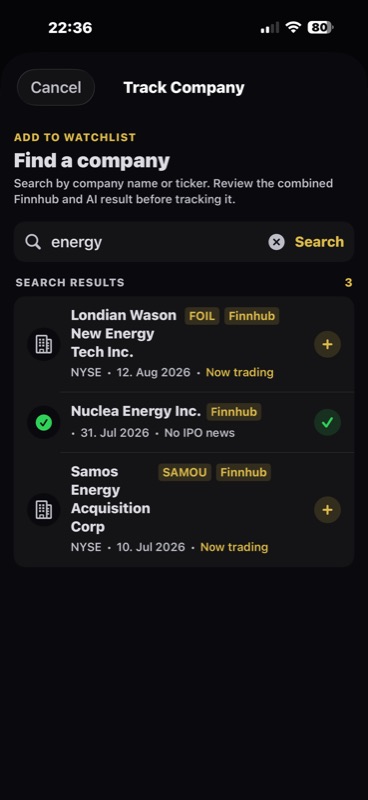
Adding a company
Search by name or ticker. A free Finnhub key covers US listings, and the app detects your tier and says what it can see instead of returning nothing. Optionally, Claude or OpenAI serves as a second source for private companies and rumoured listings the calendar does not carry.
Your keys stay yours: stored in the iOS Keychain or AES-256-GCM encrypted on Android, and sent straight to the provider they belong to.